The journey to opera …
For Michael Arivony, opera has been a journey across countries, musical traditions and disciplines. Born in Madagascar, the baritone began his musical education through church choirs and private choral groups before taking formal singing lessons in Antananarivo. Within a remarkably short time, his talent began to open doors beyond his home country.
In 2012, he made an early professional appearance as Baron Douphol in Verdi's La traviata at the Festival Opera Mauritius. The experience introduced him to the professional opera world and marked the beginning of a career that would eventually take him to some of Europe's leading opera institutions.
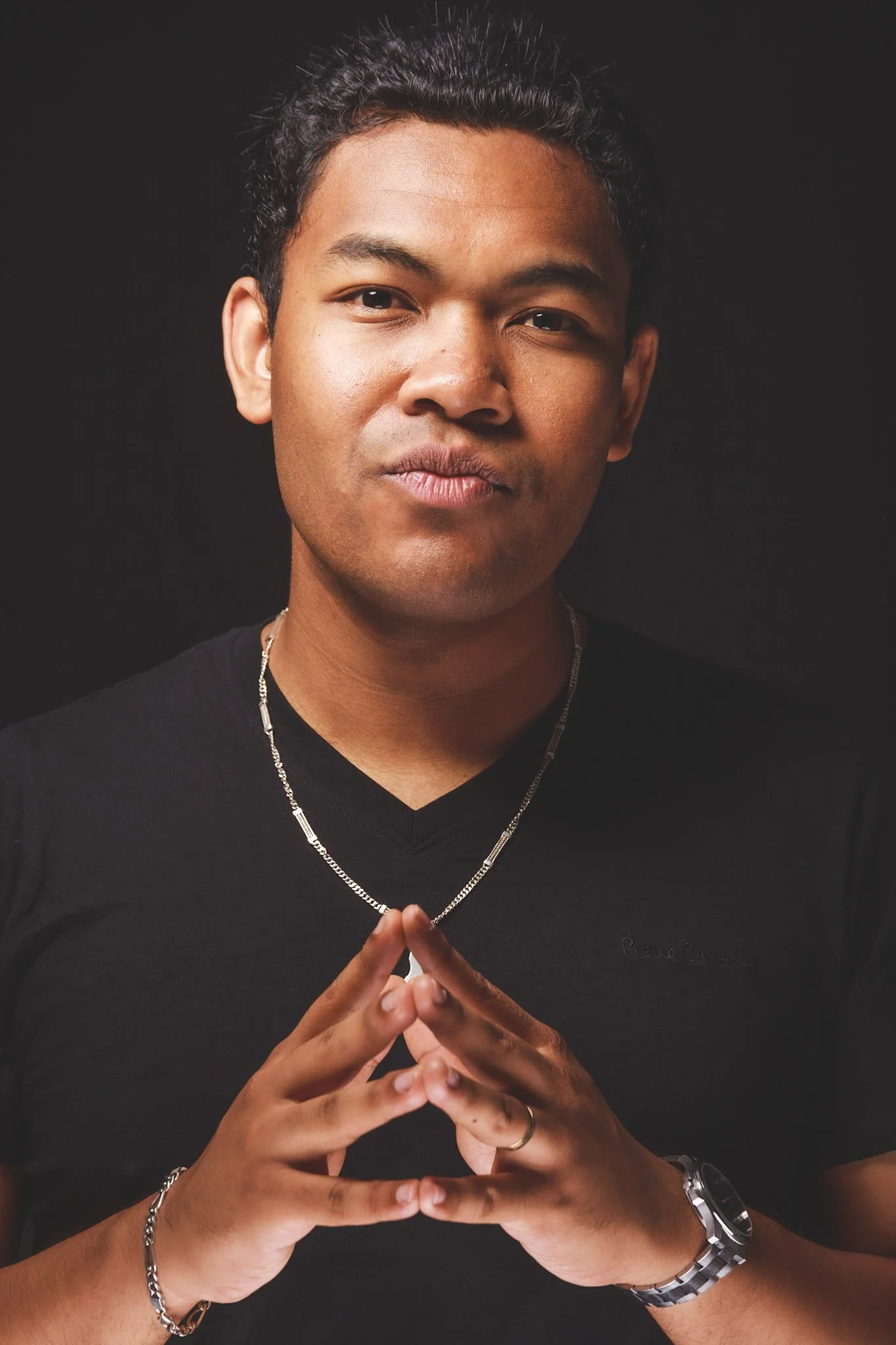
Michael subsequently moved to London to study at the Royal Academy of Music, where he completed his bachelor's degree with distinction. His interests, however, extended beyond vocal performance. He also studied orchestral conducting, working with Sian Edwards and Dr. Raymond Holden. Between 2017 and 2018, he was chief conductor of the St Bartholomew's Chamber Music Orchestra in London and later worked as a musical assistant and guest conductor with the Chineke! Orchestra.
His development as a singer continued in Germany at the Hochschule für Musik Franz Liszt Weimar. There he broadened his repertoire and developed a particular interest in Lied, the intimate German tradition of song for voice and piano. His collaboration with pianist Teodora Oprişor brought significant recognition. The pair won the International Student Lied Duo Competition in Groningen in 2020 and had previously received third prize at the Das Lied competition in Heidelberg in 2019. The musical pair were also part of the prestigious program of Orsay-Royaumont Academy in 2021.
Opera remained at the centre of his career. Among his early distinctions were the first prize in the Opera en Arles in 2019. In 2021, he represented Madagascar at the BBC Cardiff Singer of the World Competition and won third prize at the International Helmut Deutsch Lied Competition.
Vienna became home for the young baritone. In 2020, Arivony joined the International Opera Studio of the Wiener Staatsoper, where he appeared in roles including Marullo in Rigoletto, Paris in Roméo et Juliette, Dancaïro in Carmen and Figaro and Bartolo in a children's version of Rossini's Il barbiere di Siviglia. In 2022, he became a member of the Vienna State Opera's permanent ensemble.
His repertoire during these years demonstrated considerable stylistic range. He took on comic roles such as Dandini in Rossini's La Cenerentola and Malatesta in Donizetti's Don Pasquale, as well as Belcore in L'elisir d'amore. At the same time, he appeared in more dramatic repertoire, including Roucher in Giordano's Andrea Chénier and Ned Keene in Britten's Peter Grimes. He also sang Harlequin in Ariadne auf Naxos.
Another significant milestone came in 2024, when Arivony made his debut at the Salzburg Festival in Peter Sellars's production of Prokofiev's The Gambler. That year also marked his move from the Vienna State Opera to the ensemble of the Wiener Volksoper, where his repertoire has included Papageno in Mozart's Die Zauberflöte, Dr. Falke in Johann Strauss's Die Fledermaus and Figaro in Mozart‘s Le Nozze di Figaro.
In recent seasons, his career has continued to expand. In 2025, he appeared as Don Giovanni in Opera Ballet Vlaanderen's production of Mozart's Don Giovanni in Antwerp and Ghent, taking on one of the central baritone roles of the operatic repertoire. In 2026, he appears at La Monnaie in Brussels as Mercutio in Gounod's Roméo et Juliette.
Arivony's career is notable for the breadth of its musical experience. His background encompasses opera, Lied and conducting, while his professional life has taken him from Madagascar and Mauritius to London, Weimar, Vienna, Salzburg and the major stages of Belgium, Switzerland, France and Europe in general. Rather than following a single, narrowly defined path, he has developed as a musician across several traditions and roles.
At the centre of that career remains the baritone voice: an instrument that has allowed him to move comfortably between Mozart, Rossini, Donizetti, Verdi, Strauss, Britten and the French repertoire, while establishing a growing presence on the European opera stage.